
Up and Coming
May 28, 2015

NerveGear, A Reality Not Far Away
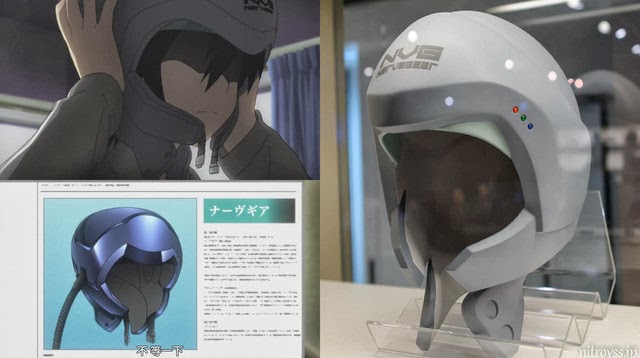

Here I was, sailing the deep seas of the internet and are suddenly encounter a blog that caught my attention. I started looking threads and found one on the NerverGear, the helmet that can take you to the virtual world of anime Sword Art Online. My goal is not to debate this topic on the anime, since this is not the appropriate place, but specifically on the helmet and say why it is a not very distant reality. I'll tell you that the text will be rather large, but those interested, read, will not regret. Let's GO!
But ... What is NerveGear?
Many people do not see anime, or did not see or know this specifically, then, here's a basic explanation: In 2012, the anime Sword Art Online (SAO) showed a fictitious reality - and well palpable - as we could see in terms of Virtual reality technology in the year 2022. The NerveGear, shown in the anime, is a helmet that reads and sends information to the brain. It serves to read and transform into brain pulse commands within the virtual world and to send pulses to the brain in order to emulate sensation and perception. In the case of anime, sending impulses is so advanced that the helmet can make the user to disconnect from the real world and feel literally inside a virtual world. In technical terms what the helmet sends are several images per second to the brain in order to emulate an environment (how many frames per second? I do not know, but no lag, then it's more than 24), this along with sensations of pain , cold, ect. All this while keeping the user in a semi-coma, unable to feel, hear, or move your body in the real world, also the result of sending electrical impulses to the brain.
When I saw this I found very plausible, including the date, 2022. When the anime went however, although many people have found a cool idea, skepticism was huge in discussions when it would actually be possible: "2022 not in 2050 we have something !!! ". The skepticism was due to the fact no one even be researching something, and they had not any virtual reality devices in reasonable time (at least not widely publicized). Coincidence or not, in 2012 (the same year the anime) the "Oculus Rift" appeared in a technology fair, and left big names in the games industry baffled with the immersion that he could pass.
Oculus Rift?
The Oculus Rift is a device created by Palmer Luckey, an amateur games in seeking a more immersive experience. The idea of the Oculus Rift left the Palmer frustration after testing various virtual reality devices and disappointed with each of them. In 2012 he presented his project at a technology fair and the result was much higher than he expected. Big fish like the owner of Steam and other companies offered millions in investment for research, development and mass production of the device.
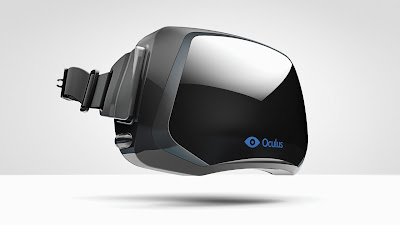
The Oculus Rift is not just a rectangular display in front of you, he gives you the same field of vision of the human eye - that reaches almost 180 degrees. Combine this with the motion sensor to emulate human vision when you turn your head.
After capital investment of large companies started the project to transform what was a prototype (which could be purchased through a more than $ 300 donation to the project on Kickstarter) in a commercially viable device. And then started the changes, improvements launched and, guess what? SUCCESS!
The biggest problem the company still faces the Oculus Rift (or facing) is the sick feeling that many people felt (some had no problems) after prolonged use of the device. The second cause explanations of analysts, was due to absurd soaking the device causes. To put it simply, the sense of immersion is so great that your brain think you're seeing something real, just that, as the prototype still gives some lags from time to time and still can not graphically convey the feeling of fluides real world (responsible for the device say that the final version that has been almost completely corrected), the human brain is confused and hence comes the feeling of sickness and malaise. This also occurs in games in first person, it is quite common. They say that the final version had this and other outstanding issues, but never had the opportunity to test ... As I understand technology however, I am pretty sure that the device still has several bugs, and "things" that will need be improved. "Things" that will come in the second corrected version of the device, which will be better than the first (it will be repeated in version 3 and ect, but not as ridiculously as will happen from version 1 to 2). It is the same that occurs with new processor architectures, the jump from first to second version is always the biggest.
Still not enough!
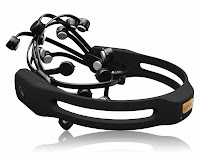
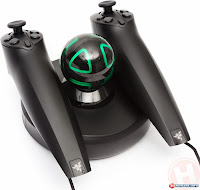
Only emulate the environment eye will not give a near SAO experience, since you will still need a manual control (mouse or joystick) to move. The solution for this already exists as the video below shows through the simultaneous use of glasses with the Emotiv EPOC Rift and the Razer Hydra - all available for purchase on the Internet.
The Emotiv EPOC can read electrical signals produced by the brain when we think, feel or do facial expressions. But how does it work? Example: When you think of "moving forward" the device will detect the brain wave created by that thought, giving a code to it - like 11101010 - then the device software will convert that number into a simpler reading, marking the code to 1, that the program's language could be the floor of command forward. This process will be repeated for the thought of "going backwards", "aside", ect. After this calibration, game software would read the entry sent by EPOC software (the number converted to 1, 2, 3, ect) and would make virtual avatar in the game walk forward or back, side, depending on the code sent. For every person is different, so before using one of these would be necessary to calibrate your brain impulses to the device, walk forward to you can be the impetus detected as the code 11153612, 11126001 to someone else, that is, the impulse may look like but it is never the same in all people. The direction is given by the user's head since the Oculus Rift has a motion sensor. And as the Emotiv EPOC still does not seem accurate enough to be able to move his arms with agility, the Razer Hydra unit is used to emulate the movement of hands and arms in the game. You can find many users videos calibrating and using EPOC, worth checking out.
Would not it dangerous ?!
Of course the main SAO still have not (or at least not for sale on the Internet for now), which is a device that sends waves to the brain in order to emulate and control sensations and perceptions. But from the moment you read the brain becomes something simple, I do not see why write it will be complicated. If the device can record the pulse coded as 11122210 is arm pain, nothing prevents that it can be optimized to send that 11122210 boost for your brain to make you think you're in pain in the arm. The biggest problem are the dangers that "writing in the brain" has (SAO even showed some of them how you hold in a coma and delete or manipulate their memories). But thinking logically, these devices that send impulses to the brain must come with "engines" unable to create very strong impulses and potentially harmful to the brain, so even that give trouble, the signal they send is so weak that impossible cause data real to the person's brain. But we will have to wait to be sure.
The Perfect World
I am holding myself to use in games here, but it is logical that the application of this device will far beyond that. You can travel to France without leaving home, meet her boyfriend (a) in a long-distance relationship - to be far less lonely - meet with the family even more each other than on a planet or even create your own private virtual world. The porn industry will profit absurd in creating games with companions or realistic virtual companions (even if the sensations emulator is already up and running). Whether sees potential it already has a game with realistic graphics and women created from the motion capture real actresses in dev elopment pro Oculus Rift!
My fear is that in the future people will lock up within these virtual worlds - to be better than your reality in most cases. This already happens in MMORPG online, but immersion is still very low and most one sees controlling a puppet than actually feeling within the game. Now, when you feel inside of it, can turn your body out of shape on a muscular body (or model for women) and having a partner or companion (an NPC with a median AI created by you) perfect both aesthetically, when in terms of personality, by his side 100% of the time, you'll want to get out of there? I'm afraid the answer, especially individuals with weak and disturbed psychological. And for people with a less fertile imagination, think that you could have your actor / actress or favorite idol beside him "doing what you want" all day, but you would have very close feelings the real world. Would you like to leave this place?

The temptation is so great that I venture even a possible lock the device after so many hours of use, to prevent people lock up in his private virtual worlds and do not want to leave the house, go to work or even feed themselves properly. The problem is that as well as unlock consoles to play pirated games, nothing prevents them discover how to unlock something too.
But when it comes? I'm crazy to buy! -q

Take into account that the virtual reality of beta testing will start in a few years with the launch of Morpheus (virtual reality glasses from Sony), it is not hard to believe that in 2022 there to be with something very close to what was shown in SAO . After all, look where cell phones were 10 years ago, only served to make connection. Today are handheld computers with more powerful processing that a top PC 10 years ago. At about four years when the first smartphones were launched doubted they could have graphics of a console ... Has anyone played Infinite Blade 3? or Real Racing 3? None of them is far behind the graphics of an Xbox 360.
The business is now wait and prepare, because the future of virtual reality will start in 2014. And if there's one thing everyone who tested the Oculus Rift agree, is that it will change the form of entertainment in gaming as we know it.
What do you think?
And you, what they think of it? What are your expectations for 2022 in terms of technology?
Well, if one day it really come to become a reality, most likely thing, I probably only use my time in the real world to work and spend the rest in a virtual world. I must say that I approve of in parts.
It is also likely to be not such a striking, something like SAO same. At first, greatest revolution, everyone buying ... Then it would become something very casual. But of course that would have people (which I consider SICK) that pass all day playing, as well as in current MMORPGs.
I think the bid of the risks to the brain would be the biggest problem. No matter the instructions vinhessem, timers, regulators who do the simulation is "less real" would always have trickster wanting to find a way. Bum is cool, says Davy Jones. It's like Nintendo. The cartridge told not to blow, and when the cartridge did not work people did what?
Of course, I'm also looking forward, what I most want is a bit of adrenaline / share. Always enjoyed more hardcore games (where you die long before passing of each part, like "Dark Souls") then I would see a game type SAO focused on physical fights proximity and little magic. As adventure / medieval fan nothing would please me more than using a sword / shield or dual blades and out killing monsters, bosses and players feeling that it was really me who was there doing everything. :geek: :geek: :ugeek: :ugeek: :ugeek: :ugeek: :geek: :geek:

    62 replies

    Participant
    March 12, 2020
    I've a question for you,
    do you prefere a game like S.A.O. or an other game in the nerve gear?
    April 3, 2020


    Hi everyone, I am a 13 year old Italian boy, fan of SAO and technology and information technology, I have been thinking about nerve gear since I saw SAO 2 years ago and lately I am conducting personal research for which I really want to dedicate my life , I'm going to make a game where you can earn real money, naturally with the right precautions, personally I hope to be able to design something similar to the nerve gear, and I'm taking a cue from the neuralink even if I don't want to dedicate myself to that completely because it consists in chips under skin, and it is too expensive for some to have a chip implanted in the brain, so I am trying to understand and at the same time study how to be able to "intercept" the movement command without going to act under skin, on the other I sing if someone were able to invent it before me, I started working on an MMORPG, which contains the usual races, spells, levels. Although different from SAO I want to make my dream of entering an anime come true, my real goal is to create another world, where each otaku can make his dreams come true.

    P.S. this is a flow of thoughts


    I'm really looking to do a similar thing. Creating nervegear would be such an amazing thing! Or doing anything to help it get created. If I didn't get to make nervegear I would love to make a game for it aswell or maybe make an updated version. Something like nervegear would be so cool! 
    Participant
    April 5, 2020


     Hello everyone, lately I have did an progect of an omnidirectional carpet (capable of going in all directions). thanks to this invention and a special suit you can literally stay in both "worlds" since with it you can also do parkour, run freely and of course feel the feeling of emptiness in case you fall from high heights. Of course, all of this, also moving the body in reality, but therefore the question spontaneously comes to me, you pearson love SAO like me, settle for this until someone can design the Nerve Gear?


    Participant
    April 5, 2020
    Type your commentLord_Formaggino said:


     Hello everyone, lately I have did an progect of an omnidirectional carpet (capable of going in all directions). thanks to this invention and a special suit you can literally stay in both "worlds" since with it you can also do parkour, run freely and of course feel the feeling of emptiness in case you fall from high heights. Of course, all of this, also moving the body in reality, but therefore the question spontaneously comes to me, you pearson love SAO like me, settle for this until someone can design the Nerve Gear?


    If at someone intrasting, I need 2 years for create this "ultimate carpet"
    New Participant
    April 29, 2020
    Here are some articles of acknowledged futurologists:


    (Image: Ready Player One)
    Ian Pearson, who is right about 85%, predicted: 

    Pearson said advancements in nanotechnology will make it possible to plug our brains into computers and live in a simulated world.

    "You can certainly make something a bit like the Matrix, if you wanted to," Pearson told Tech Insider. "Around 2045, 2050, you could link people's brains to the computers so much that they believe they’re living in a virtual world." Source: 

    17 ways technology will change our lives by 2050 -Business Insider

    (I can't post links because of the forum rules, just google the titles)

    Ray Kurzweil
    – the world’s foremost futurist, authoring bestsellers like “The Age of Spiritual Machines” and “How to Create a Mind.” He’s so influential that Google hired him to lead its artificial intelligence efforts. He is very well known for making predictions, which are right about 85% of the time-, prediction:
    • Nanobots will plug our brains straight into the cloud
    Tech of the future: nanobots. He believes, that by the 2050, nanobots will plug our brains straight into the cloud, it will give us full immersion virtual reality from within the nervous system. Just like we do know with our smartphones, we will be able to do it with our brains, we’ll be able to expand our neocortex in the cloud. And forget about memory problems, evidence problems, etc. Source:

    TECH OF THE FUTURE: TECHNOLOGY PREDICTIONS FOR OUR WORLD IN 2050 -ApiumHub

    I will share real scientific researches in the next hours, (no futurologist tr*sh xDDD)
    Spanish here, Im practicing my english so be gently.

    New Participant
    April 29, 2020

    Recent advancements in neural nanotechnology:

    A 3-D microscope image shows the mesh injected into a region of the brain called the lateral ventricle. (Lieber Research Group, Harvard University)

    1.- A Flexible Circuit Has Been Injected Into Living Brains -smithsonianmag
    Syringe-injectable electronics -Nature Nanotechnology 2015

    Tested on mice, the rolled mesh fits inside a syringe and unfurls to monitor brain activity:

    Now, a new kind of flexible circuit has brought us one step closer to this science fiction future. Implanted via injection, a grid of wires only a few millimeters across can insinuate itself with living neurons and eavesdrop on their chatter, offering a way for electronics to interface with your brain activity.
    Said to Nature Nanotechnology:

    "We demonstrate several applications of syringe-injectable electronics as a general approach for interpenetrating flexible electronics with three-dimensional structures, including (1) monitoring internal mechanical strains in polymer cavities, (2) tight integration and low chronic immunoreactivity with several distinct regions of the brain, and (3) in vivo multiplexed neural recording. Moreover, syringe injection enables the delivery of flexible electronics through a rigid shell, the delivery of large-volume flexible electronics that can fill internal cavities, and co-injection of electronics with other materials into host structures, opening up unique applications for flexible electronics"


    The rolled electronic mesh is injected through a glass needle into a water-based solution. (Lieber Research Group, Harvard University)

    2.- Japanese scientists just used A.I. to read minds and it’s amazing -CNBC (IKR, its cnbc, but they give the link to the PDF of the scientific research xP) 2018

    In late December, Guohua Shen, Tomoyasu Horikawa, Kei Majima and Yukiyasu Kamitani released the results of their recent research on using artificial intelligence to decode thoughts on the scientific platform, BioRxiv.
    Machine learning has previously been used to study brain scans (MRIs, or magnetic resonance imaging) and generate visualizations of what a person is thinking when referring to simple, binary images like black and white letters or simple geographic shapes (as shown in Figure 2 here).

    But the scientists from Kyoto developed new techniques of “decoding” thoughts using deep neural networks (artificial intelligence). The new technique allows the scientists to decode more sophisticated “hierarchical” images, which have multiple layers of color and structure, like a picture of a bird or a man wearing a cowboy hat, for example.


    New Participant
    April 29, 2020

    "Input" new technologies:

    A brain slice that shows the hippocampus cells that were activated by the new stimulation technique (bottom image, lighter green areas on the left) NeuroscienceNews.com image is credited to the researchers.

    A Non-Invasive Method for Deep Brain Stimulation -neurosciencenews 

    (2017)

    Source: MIT.

    Electrodes placed on the scalp could help patients with brain diseases.

    Delivering an electrical current to a part of the brain involved in movement control has proven successful in treating many Parkinson’s disease patients. This approach, known as deep brain stimulation, requires implanting electrodes in the brain — a complex procedure that carries some risk to the patient.

    Now, MIT researchers, collaborating with investigators at Beth Israel Deaconess Medical Center (BIDMC) and the IT’IS Foundation, have come up with a way to stimulate regions deep within the brain using electrodes placed on the scalp. This approach could make deep brain stimulation noninvasive, less risky, less expensive, and more accessible to patients.

    “Traditional deep brain stimulation requires opening the skull and implanting an electrode, which can have complications. Secondly, only a small number of people can do this kind of neurosurgery,” says Ed Boyden, an associate professor of biological engineering and brain and cognitive sciences at MIT, and the senior author of the study, which appears in the June 1 issue of Cell.

    Doctors also use deep brain stimulation to treat some patients with obsessive compulsive disorder, epilepsy, and depression, and are exploring the possibility of using it to treat other conditions such as autism. The new, noninvasive approach could make it easier to adapt deep brain stimulation to treat additional disorders, the researchers say.

    “With the ability to stimulate brain structures noninvasively, we hope that we may help discover new targets for treating brain disorders,” says the paper’s lead author, Nir Grossman, a former Wellcome Trust-MIT postdoc working at MIT and BIDMC, who is now a research fellow at Imperial College London.

    Black Mirror

    Deep locations

    Electrodes for treating Parkinson’s disease are usually placed in the subthalamic nucleus, a lens-shaped structure located below the thalamus, deep within the brain. For many Parkinson’s patients, delivering electrical impulses in this brain region can improve symptoms, but the surgery to implant the electrodes carries risks, including brain hemorrhage and infection. 

    Other researchers have tried to noninvasively stimulate the brain using techniques such as transcranial magnetic stimulation (TMS), which is FDA-approved for treating depression. Since TMS is noninvasive, it has also been used in normal human subjects to study the basic science of cognition, emotion, sensation, and movement. However, using TMS to stimulate deep brain structures can also result in surface regions being strongly stimulated, resulting in modulation of multiple brain networks.

    The MIT team devised a way to deliver electrical stimulation deep within the brain, via electrodes placed on the scalp, by taking advantage of a phenomenon known as temporal interference.

    Source: 
    Original Research: Full open access research for “Noninvasive Deep Brain Stimulation via Temporally Interfering Electric Fields” by Nir Grossman, David Bono, Nina Dedic, Suhasa B. Kodandaramaiah, Andrii Rudenko, Ho-Jun Suk, Antonino M. Cassara, Esra Neufeld, Niels Kuster, Li-Huei Tsai, Alvaro Pascual-Leone, Edward S. Boyden in Cell. Published online June 1 2017 doi:10.1016/j.cell.2017.05.024

    New Participant
    April 29, 2020

    How neurons work and more "input" technologies:


    Google the next information for more:

    Neural population coding: combining insights from microscopic and mass signals

    Source: US National Library of Medicine National Institutes of Health Search database

    Behavior relies on the distributed and coordinated activity of neural populations. Population activity can be measured using multi-neuron recordings and neuroimaging. Neural recordings reveal how the heterogeneity, sparseness, timing, and correlation of population activity shape information processing in local networks, whereas neuroimaging shows how long-range coupling and brain states impact on local activity and perception. To obtain an integrated perspective on neural information processing we need to combine knowledge from both levels of investigation. We review recent progress of how neural recordings, neuroimaging, and computational approaches begin to elucidate how interactions between local neural population activity and large-scale dynamics shape the structure and coding capacity of local information representations, make them state-dependent, and control distributed populations that collectively shape behavior.

    A light-sensitive compound enables heatless membrane modulation in photoswitches -TechXplore

    Source: Nature Nanotechnology


    Optical technologies that can be used to modulate neuronal activity are opening up exciting possibilities for research in neuroscience and biology. Optical tools allow neuroscientists to excite and inhibit neurons or areas of the brain at will. They can thus be used to investigate the function of specific brain circuits or regions, as well as to identify new potential treatments for neurological and psychiatric diseases.


    The generation of tethered azobenzene photoswitches targeted at membrane bilayers or linked to ion channels is a pioneering optical technique that could further aid the study of the human brain. This technique, however, particularly when implemented at high light intensities, can lead to a considerable increase in temperature and can thus be harmful to neurons when used repeatedly.

    To overcome this limitation, researchers at the Italian Institute of Technology (IIT) in collaboration with Politecnico di Milano, have recently created a new light-sensitive azobenzene compound, dubbed Ziapin2, which can be used to build photoswitches that do not increase in temperature when irradiated with visible light. This new compound, introduced in a paper published in Nature Nanotechnology, partitions into the plasma membrane with a high stability, enabling its thinning and an increased capacitance at a steady state.


    What will we be able to do in the future?


    New Participant
    May 26, 2020
    i dont have much to contribute to this conversation except i have a lot of interest in understanding how nerve-gear would work. im not well researched in this field however i want to be there hen you figure out ho this works. work hard guys! :smile:
    New Participant
    June 9, 2020
    If you use that to your advantage, you could add a split off of an
    existing nerve, permanent or not, but the muscles won't move because
    there ”paralyzed” then giving the effect of the nerve being redirected. I
    am unsure of the effects gama would have on the muscle if released
    multiple times