Unity Development
Recently active
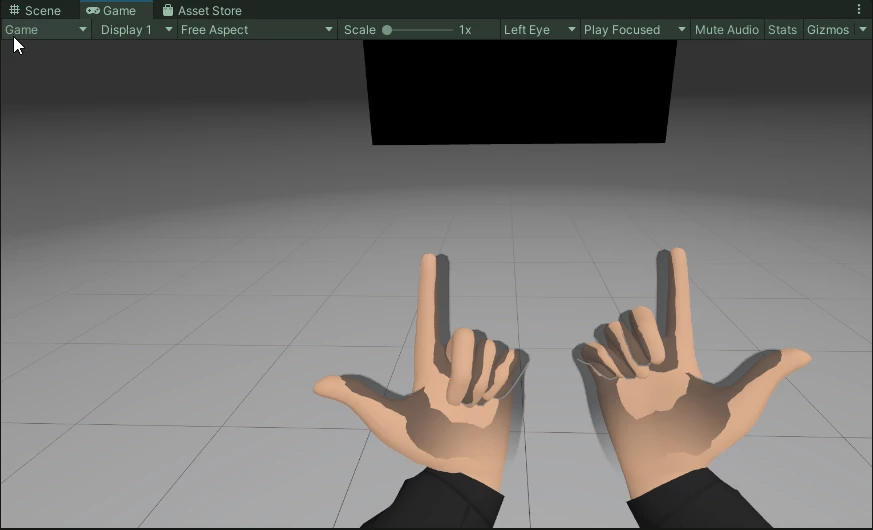
HelloI'm writing here to get info about the availability of high-quality samples for the new Meta XR SDK.While the Oculus Integration SDK provided excellent examples, particularly in areas like gesture recognition and object grabbing, I've encountered difficulties finding similar quality samples for the Meta XR SDK. The few samples I've come across seem to be malfunctioning and not as useful as their Oculus counterparts.Could anyone kindly point me in the direction of where I might find samples for the Meta XR SDK that are at least as well-crafted as those found in the Oculus Integration SDK? Specifically, I'm looking for examples that demonstrate how to utilize gestures effectively, as well as samples showcasing grab interactions similar to the ones illustrated in this link, which were truly exceptional (images below)!!!
Please help! I have read over this page many times, and done everything I can think of:https://developer.oculus.com/documentation/unity/move-body-trackingBut when my app runs, adb always shows "iobt": false and I get IK body tracking instead. In my logcat I see:Info XR_FB_body_tracking ------------ xrCreateBodyTrackerV2FB -----------Error OVRPlugin [XRCMD][failure] [XR_ERROR_RUNTIME_FAILURE]: xrRequestBodyTrackingFidelityMETA(m_xrBodyTracker, fidelity), arvr/projects/integrations/OVRPlugin/Src/Util/CompositorOpenXR.cpp:8151 (arvr/projects/integrations/OVRPlugin/Src\Util/CompositorOpenXR.h:302)Warn Unity [OVRBody] Failed to set Body Tracking fidelity to: HighWarn Unity OVRBody:StartBodyTracking()Warn Unity OVRBody:OnEnable()It appears BodyTracking is failing to initialise to 'high' fidelity (IOBT) but I don't know why? How can I debug this? Can I find out what CompositorOpenXR.cpp:8151 is doing?
Is there a known limitation whereby enabling passthrough disables IOBT? Perhaps because both subsystems need to access the cameras?
Apparantly I had not and it looked horrible, so I was trying to figure out why it looked horrible. SSOA was still on. Should have listened to the project setup tool I guess.
Dear Meta Community,I am reaching out to seek guidance on a specific issue I encountered while working with my Meta Quest 3 headset and Unity environment.Recently, I developed a 3D Unity environment that I'm excited to explore using my Meta Quest 3 headset. I successfully downloaded the SDK Meta package and connected my headset to my PC running Windows. Upon entering the Unity environment through my headset, I found myself fully immersed.However, I now find myself wanting to adjust the screen size within the Unity environment. Rather than the current setup, where the Unity environment covers my entire field of view, I am seeking to have the environment displayed as a smaller square. This adjustment would allow me to maintain immersion in the Unity environment while still being aware of my surroundings.Could someone please provide guidance on how to achieve this? Any assistance, tips, or resources would be greatly appreciated.Thank you in advance for your help and support.
Has anyone tried to re-write the avatar SDK for unity ECS?
I recently implemented achievements in the game I'm working on. Everybody else sees Meta's notification of an achievement when they get one. However, my account does not receive a notification when I earn an achievement, even though I have seem to have all notifications turned on in the headset. Furthermore, if I go to my account's "View Your Information" page, it says I was awarded the achievement.What might cause a user to not receive notifications about achievements after successfully earning them?
I want to make an application where one of the steps is to make sense of the items around me, I initially wanted to use the self contained scene understanding but I found out that it has to do a spatial scan first which doesn't meet my expectations, I want him to be real time so I want to get the camera information to use to implement the item recognition function myself.How to get data from quest3 color camera, or get data from passthrough, but in video streaming form?If not, is there an appropriate solution for my need?
Hi, I have a question about Building Blocks in Unity. Is it possible to modify them (e.g. change the defaul mesh to my own) in order to create a project for Meta Quest 3. I'm mainly asking if the scripts of these Building Blocks can be modified. It's not entirely clear to me from the License Agreement. For example, 1.2.1 says: You may not modify or create derivative works from any SDK or its component (other than sample source code described in this Section or expressly authorized by the documents accompanying the SDK);
I used Unity Netcode to build my multiplayer for my game in Meta quest 3 but when I select host, another player comes on top of it even when another player has not used the room code to join. how do I fix this??
Having a problem loading my scene in from OVR Last week worked perfectly fine finding my scene definition. Today no changes at all will not load the scene and am gettinga popup before the app starts that "Scene Capture does not work over link" As well as "Loading the Scene definition yielded no result. Typically, this means the user has not captured the room they are in yet. Alternatively, an internal error may be preventing this app from accessing scene. Invoking NoSceneModelToLoad." in the warnings output in the editor. I successfuly set up the scene and can see my bounding boxes as I get close to the objects. My settings are as follows:I have also tried dumping point cloud data and re running room setup multiple times and cannot get the scene to load properly. Any help would be appretiated as I have hit a wall on this. PC and Device Specs:Alienware Windows 10Unity 2022.3.7fOculus Quest ProMeta Quest All in One SDK V60.0
I try to use passthrough to fade between vortual and real space. Works theoretically, by dynmically adjusting passthrough opacity and switching from overlay to underlay passthrough.However, if I switch passthrough to overlay and back to undelay, it stays in overlay mode and the virtual objects are not visible.Any idea?
I'm trying to create a compositor overlay of shape offcenter cubemap for Quest3 using the OVROverlay script and I only get the following errors:OPENGL NATIVE PLUG-IN ERROR: GL_INVALID_ENUM: enum argument out of rangeUnrecognized overlay.m_desc.Shape 4 (arvr/projects/integrations/OVRPlugin/Src/Util/CompositorOpenXR.cpp:9490)It looks like offcenter cubemap is not (anymore) supported, perhaps due to switching to the openxr backend? Normal cubemap works fine. I'm using Meta XR Core SDK version 60.0.0 and Oculus XR Plugin version 4.2.0 with Unity 2022.3.11f1.
I'm working on a VR experience that requires all the users be on the same physical room. I've managed to get working an OVRSpatialAnchor and save it locally for later sessions. I can calibrate the VR room to match the real life room using that anchor, save the anchor and load it for repositioning the content aligned to the real world. I'm using Photon as network solution and I can have all the users on the same room. Al works fine there.The problem is: I would like do the room calibration using only one headset and then share that anchor to other users in order to avoid calibrate the room again and again for the same session. Other users could get that anchor and automatic get the content aligned, ready to play.I've created the app on the Oculus developer dashboard, and I've requested permissions to handle user ID and User Profile on that app, it's approved. So, the next steps are confused to me, should I add every headset user to the users list on the app in order to share
Hi guys,Thanks for all the great work you do on the Unity Oculus SDK! How can I report a bug?I have an app that uses passthrough and microphone. The very first time the app starts (after install) the Android microphone permissions screen appears. This is fine. But after granting permission my passthrough does not work (all black).If I restart the app, such that it doesn't need to ask microphone permission any more, the passthrough is fine.I'm pretty sure it's the 'cut to Android permissions screen' that is messing up the passthrough.Can you please get this resolved?Regards,Richard.
Hello everyone, are there anyone know how to detect app quit on Oculus Go? I have tried using OnApplicationQuit(), but it doesn't work. Unfortunately, after googling, there is no luck on what I am looking for. What I would like to do is to save the int with PlayerPref() when app is quit.
I'm following this tutorial on creating ghost line reticles:https://developer.oculus.com/documentation/unity/unity-isdk-create-ghost-reticles/#ghost-lineThe ReticleLine works great with objects setup for Distant Hand Grab Interactables - is there a way to use this for objects that aren't grabbable?e.g I'd like to use the ReticleLine behaviour to detect hover on game objects but not include any grabbable behaviour.Thanks!
After the v62 update, my play in editor times had jumped to 20-60 seconds. I managed to profile and found the culprit as seen in the photo: While I narrowed down the issue in Unity, this happens with my packaged application, and other unity applications. I believe anything using the openXR runtime.Things I've tried- Uninstall Meta Quest Software and clearing all app data folders. Then re-install.- Upgraded Graphics Drivers (I have a GTX 1080).- Computer Restart- Oculus Quest 2 Factory Reset
I want to do full body tracking using iobt. If you install the meta movement SDK and view the sample scene, the avatar will appear properly. However, if I take the avatar fbx file I use and use it, the avatar comes out distorted like that. Is there a way to automatically and accurately perform avatar retargeting?i use Meta Quest Prounity 2023.3.17f1please help me!!!!
Hello everyone,I am facing an issue with the passthrough mode on the Meta Quest 3 using Unity (version 2022.3) with the Quest Link feature. I am seeking advice or feedback on this matter.I've developed a test application in Unity for PC, aiming to create a mixed reality application that runs on PC and utilizes the passthrough capabilities of the Quest 3. The application works perfectly when connected through Air Link (wifi 6). The rendering is smooth, and hand tracking works well. However, as soon as I activate the Passthrough effect on a surface, the application slowdowns and becomes unusable. I've noticed that this issue disappears when the application is launched directly in the headset through an Android build, indicating that the Passthrough when using Air Link might be the problem. I plan to buy a cable to test Quest Link with a USB connection, but I'm skeptical that this will resolve the issue. My ultimate goal is to ensure seamless performance of this mixed reality application
Quick question.. Does anyone here know if IOBT is compatible with Meta’s current Avatar system? Or are they two separate things?Thanks In advance.
Hello.I am working on a new project for my thesis in VR using Unity (version 2022.3.13f1).It's been 1 year since I have not worked on XR. I am finding it difficult to catch up with tutorials that are now too old for the development of new applications in Unity (e.g., the tutorials I used to follow to create VR apps were using this Oculus integration that is now deprecated and if I would upgrade I cannot make the player move).Can anyone advise me on what new tutorials are out there to build VR applications in Unity? I have an Oculus Quest 2.Thank you!
I am trying to use Horizon Workrooms as developer environment for VR development. I can edit scene and source code in Horizon Workrooms. But when I start the app in Unity IDE, it starts in flatscreen mode instead of VR mode. PC Oculus Home runs VR apps from Unity IDE in VR mode, but it cannot track Logitech K830 keyboard, Is it possible using Horizon Workrooms to start the VR app from Unity IDE in VR mode?
For the few of us here who are using real time spot or point of lights, the Meta Avatars now sort of support using the AvatarSdkManagerLibrary in the body tracking input field (which BTW is odd that this is what sets the shader). It is barely passable for me at this time due to this glitch shown here where no matter the settings of a real-time spot or point of light, it will flicker on an off when moved away or towards a character and not in a gradual increase/decrease of light as would be with any other object with a real time shader. It is making it hard to implement but it is a step in the right direction at least. If you figured out how to make this shader light gradual, I would love to hear from you. If Meta is reading this, please update the avatar shaders as I really need realtime lights as I have hundreds of them in my title and the current implementation is not really cutting it. Light Issue Example:https://drive.google.com/file/d/1DmaX9hkYrK7hVVbsZn_CO2VigCAsY
Is it my issue or global bug? It looks foggy , no colors.
Already have an account? Login
Enter your E-mail address. We'll send you an e-mail with instructions to reset your password.